

How Do You Soothe a Dog's Itchy Skin After Grooming?
Last Updated: October 26, 2026
Quick Summary
To soothe dog skin after grooming, rinse away shampoo residue with lukewarm water, pat dry, and block licking with a cone or recovery suit. Then choose one comfort measure, such as a colloidal oatmeal rinse or cool compress, and check the skin morning and evening for 24 to 48 hours.
- Mild clipper irritation typically improves by 48 to 72 hours with home care.
- Rinse suspected shampoo residue with lukewarm water only, no soap.
- Soak your dog in a colloidal oatmeal bath for 10 minutes using lukewarm water.
- Pick one soothing measure on day one so you can tell whether it helps.
- See a vet immediately for facial swelling, hives, or difficulty breathing.
Table of Contents
- Why Is Your Dog Itchy After Grooming?
- Your First 24 Hours: A Step-by-Step Calming Plan
- Red Bumps on Dog After Grooming: What They Mean
- Oatmeal Baths, Conditioners, and Shampoo for Sensitive Skin
- Choosing a Dog-Safe Anti-Itch Spray
- When to See a Vet for Dog Skin Irritation
- Preventing Irritation Next Time: Talk to Your Groomer
- Build a Gentler Grooming Kit at Home
- Frequently Asked Questions
Why Is Your Dog Itchy After Grooming?
A dog itching after grooming is usually reacting to one of three things: clipper irritation, leftover shampoo residue, or skin that was already dry before the appointment. The good news is that most cases settle within a day or two with simple steps to soothe dog skin at home.
Here's what most guides get wrong: they treat every itch as an allergy. In practice, the cause is usually mechanical or chemical, not immune. That distinction changes what you do next.
Clipper Irritation, Shampoo Residue, and Dry Skin
Clipper irritation happens when the blade runs too close to the skin or gets too warm.
Shampoo residue is the quiet culprit. If the coat wasn't rinsed fully, dried shampoo sits against the skin and pulls moisture out.
Dry skin gets worse after grooming because bathing strips natural oils from the skin barrier.
A common mistake is assuming the groomer did something wrong. Sometimes they did.
Your First 24 Hours: A Step-by-Step Calming Plan
The first day matters more than anything you do later. Your goal is simple: stop the scratching cycle before it breaks the skin, and gather enough information to know whether this is a routine reaction or something that needs a vet.
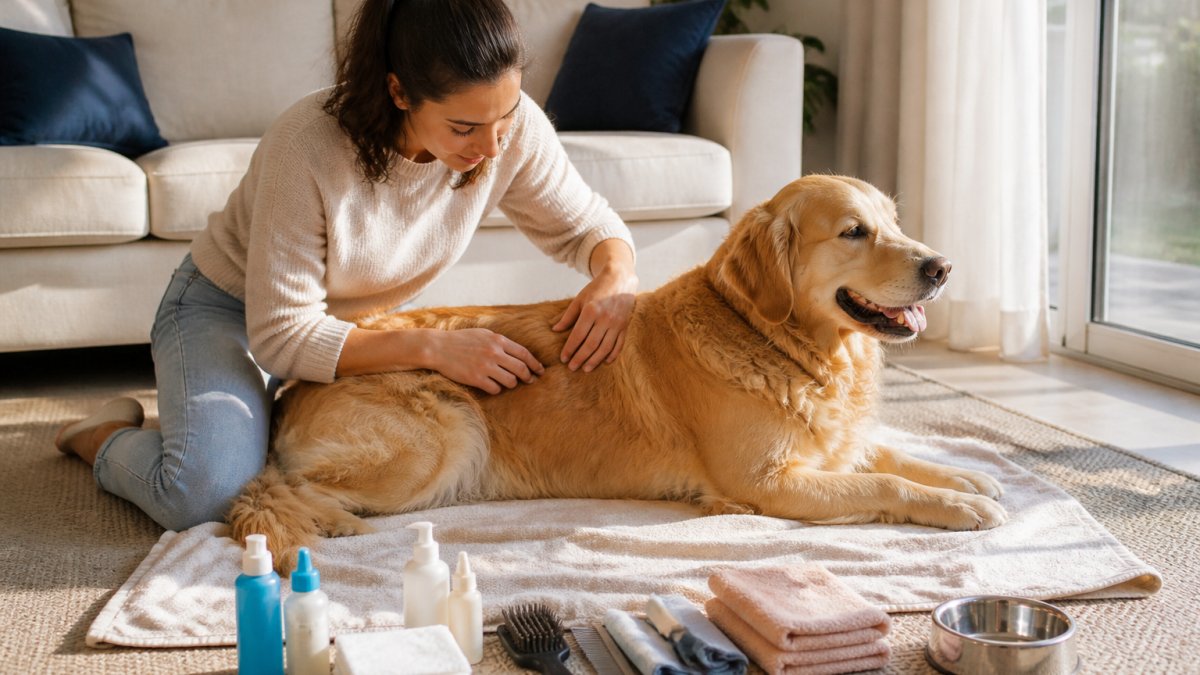
Step 1: Check the Skin Before You Do Anything Else
Part the fur and look closely. You're checking for four things:
- Redness in patches where clippers ran
- Red bumps or pustules that weren't there before
- Broken skin or raw spots from scratching
Snap a photo in good light. You'll want it for comparison tomorrow, and for the vet if things don't improve. Note the time you checked, you'll repeat this at the same time tomorrow.
Step 2: Rinse, Dry, and Block the Licking
If you suspect shampoo residue, rinse the coat with lukewarm water only. No soap. Pat dry with a clean towel, then keep the dog warm.
Licking is the enemy here. A dog that licks a red patch for an hour turns irritation into a hot spot.
Watch out: Never apply a human antihistamine, hydrocortisone cream, or pain reliever to your dog's skin without veterinary guidance.
Step 3: Choose One Comfort Measure, Not Five
Pick a single soothing step for the first day so you can tell whether it helps. A colloidal oatmeal rinse or a cool compress is enough.
A cool compress, a clean cloth wrung out in cool water, is the simplest option for a dog that will tolerate it. Hold it gently on the red area for a few minutes at a time.
Step 4: Set a Monitoring Schedule
Check the skin at the same times each day: morning and evening. At each check, note three things:
- Is the redness the same, smaller, or larger?
- Are there new bumps, pus, or crusting?
- Is the scratching better, worse, or unchanged?
Mild clipper irritation typically looks the same or slightly better by the 24-hour mark and clearly improved by 48 to 72 hours. If the redness is spreading, if new bumps appear, or if your dog seems more uncomfortable on day two than day one, that is your signal to call the vet rather than continue home care.
Step 5: Protect the Skin Barrier Overnight
Before bed, make sure the area is clean and dry. If you used a shampoo or rinse, confirm it was fully rinsed out, residue left overnight is a common reason itching worsens by morning. Keep the cone or suit on overnight if your dog scratches in its sleep.
Red Bumps on Dog After Grooming: What They Mean
Red bumps on a dog after grooming usually mean one of four things: clipper burn, folliculitis from irritated hair follicles, a contact reaction to a product, or an existing skin condition that grooming made visible.
Here's how to tell them apart:
| What You See | Likely Cause | What to Do |
|---|---|---|
| Flat redness in clipper paths | Clipper irritation | Cool compress, monitor 24-48 hours |
| Small raised bumps, no pus | Folliculitis or friction | Keep clean and dry, prevent licking |
| Bumps with pus or crusting | Possible infection | Call your vet |
| Hives, facial swelling, rapid onset | Allergic reaction | Veterinary care immediately |
Furunculosis is the term for deeper follicle infections. It shows up as painful, swollen bumps that may drain. That's not a wait-and-see situation.
The real difference between clipper irritation and infection comes down to timing and spread. Clipper irritation peaks within hours and fades. Infection worsens over days and spreads.
Oatmeal Baths, Conditioners, and Shampoo for Sensitive Skin
An oatmeal bath is the most reliable home step to soothe dog skin that is itchy.
Here's how to do it properly:
- Use lukewarm water, never hot
- Fill the tub enough to reach your dog's belly
- Use a colloidal oatmeal product made for pets, or grind plain oats into a fine powder
- Soak for 10 minutes, scooping water over the back
- Rinse gently with clean water
- Pat dry and keep the dog warm
Shampoo choice matters just as much. Look for hypoallergenic shampoo with no fragrance or dyes. Oatmeal-based formulas help.
Follow with a light conditioner to restore the skin barrier and lock in moisture. Rinse it out fully.
If you want a gentler product lineup to begin with, our guide to organic pet grooming essentials covers options built for sensitive coats.
4 in 1 Electric Pet Grooming Kit - Hair Trimmer, Clippers, Nail Grinder →
Choosing a Dog-Safe Anti-Itch Spray
A dog-safe anti-itch spray should contain pet-approved ingredients, be free of alcohol and fragrance, and be labeled for veterinary or pet use.
What to look for:
- Colloidal oatmeal or aloe for calming
- No alcohol, no synthetic fragrance, no dyes
- Clear dosing instructions by weight
Spray onto your hand first, then work it into the coat. Direct spraying startles most dogs and wastes product.
If your dog has a known sensitive-skin history, it's worth reading grooming tools for sensitive skin before you buy anything new.
When to See a Vet for Dog Skin Irritation
Most post-grooming itch is mild and settles on its own. The hard part is knowing which reactions are routine and which need a vet now. Use this triage guide to sort symptoms by urgency rather than treating every red patch as an emergency.
Green: Monitor at Home
These signs are common after grooming and usually resolve within 24 to 48 hours with the home care steps above:
- Flat redness in the paths where clippers ran, with no swelling or broken skin
- Mild scratching that your dog can be redirected from with a toy, chew, or short walk
- Small flakes or dry patches in the coat
Check the skin once in the morning and once in the evening. Photograph the area in the same light each time so you can compare spread and color honestly.
Yellow: Call Your Vet Within 24 Hours
These signs suggest the irritation is beyond simple clipper burn or dry skin and may need topical or oral treatment:
- Red bumps with pus, crusting, or a bad smell, possible folliculitis or a surface infection
- Itching that is worse on day two or three instead of better
- Raw, broken, or bleeding skin from scratching or licking
A phone call is enough at this stage. Describe what you see, send the photos you took, and ask whether the dog should be seen. Many vets will advise a cone, a specific shampoo, or a same-week appointment rather than an emergency visit.
Red: Seek Veterinary Care Immediately
These signs can indicate a severe allergic reaction, a deeper infection, or another condition that should not wait:
- Facial swelling around the muzzle, eyes, or ears
- Hives, raised welts that appear quickly across the body
- Vomiting, diarrhea, or wobbliness alongside skin signs
Facial swelling and breathing changes are emergencies. Skip the call and go in.
Why Timing Alone Doesn't Tell You the Cause
A common mistake is assuming that because a reaction started right after grooming, it must be clipper irritation. Timing is a clue, not a diagnosis.
That is why the triage above focuses on what you see and how fast it changes, not just when it started. A vet can distinguish clipper irritation from infection, allergy, or an underlying condition with an exam and, if needed, a skin cytology.
What to Tell Your Vet
Bring or send:
- Photos from the day of grooming and each day since
- The groomer's products and tools, if you know them, shampoo name, conditioner, blade length
- A timeline of when the itching started and what you have already tried
When in doubt, call. A quick phone consult costs far less than treating an established skin infection, and it gives you a clear plan instead of a wait-and-see guess.
The American Veterinary Medical Association's pet owner resources explain what counts as urgent and what can wait.
Preventing Irritation Next Time: Talk to Your Groomer
Prevention starts with a conversation, not a product. Tell your groomer three things before the next appointment:
- What happened last time and how long it took to settle
- Your dog's skin history, including any past reactions
- What you want avoided, such as clip length, blade type, or specific products
Ask them to use a fresh blade, take breaks if the blade heats up, and rinse thoroughly. Most groomers will note this on your file.
For older dogs or dogs with ongoing skin issues, comfort-focused grooming makes a real difference. Our safe grooming guide for older dogs walks through a seven-step approach that reduces stress on sensitive skin.
Build a Gentler Grooming Kit at Home
Doing more grooming at home gives you control over blade temperature, product choice, and rinse time. That control is what prevents repeat irritation.
A practical home kit includes:
- Clippers with a cool-running blade and a guard comb
- A nail grinder instead of clippers for nails
- A soft slicker brush with rounded tips
Our 4-in-1 electric grooming kit covers trimming, clipping, and nail grinding in one tool, with a quiet motor under 60 dB and up to two hours of cordless use.

If you're assembling your first kit, our beginner's buying guide breaks down which components are worth buying first.
Frequently Asked Questions
How long does grooming irritation last in dogs?
Most mild post-grooming irritation settles within 24 to 48 hours once the coat is fully rinsed and dried and the dog stops licking the area. Clipper burn and minor razor irritation often look worse on day two before improving. If redness, scratching, or licking is still increasing after 48 hours, or if the skin looks broken or smells unpleasant, book a vet visit rather than waiting it out.
Why is my dog itchy after grooming when nothing looks wrong?
A dog itchy after grooming with clear skin is usually reacting to one of three things: shampoo residue left in the coat, fine clipper hair trapped against the skin, or the simple sensation of a coat that has just been cut short. Rinse the coat with warm water, dry it thoroughly, and keep the dog busy for a few hours. If the scratching continues past two days, ask your groomer which shampoo and tools were used so you can rule out a product reaction.
Can I use a dog-safe anti-itch spray right after grooming?
Yes, provided the spray is formulated for dogs and the skin has no open cuts or broken areas. Apply a dog-safe anti-itch spray to intact skin only, keep it away from the eyes and mouth, and follow the label directions rather than improvising a dose. Never use human hydrocortisone or antihistamines without veterinary guidance, since the correct product and amount depend on your dog's size and health history.
When should I take my dog to the vet for skin irritation after grooming?
Call your vet if you see pustules, weeping or crusted lesions, spreading redness, a bad smell, or patches of hair loss. The same applies if your dog is licking constantly, seems painful when touched, or is itchy for more than 48 hours with no improvement. These signs point toward a skin infection or an allergic reaction rather than simple clipper irritation, and both need veterinary care rather than more home remedies.
Grooming shouldn't leave your dog miserable for days. If you want tools and products chosen with sensitive skin in mind, North Shore Pets stocks expert-approved grooming essentials backed by our Tail Satisfaction Guarantee. You get premium quality, a hassle-free shopping experience, and satisfaction or your money back. Get started with North Shore Pets and build a grooming routine your dog actually tolerates.
