

Safe Grooming for Older Dogs: 7-Step Comfort Guide
Table of Contents
- Why Grooming Still Matters for Your Older Dog
- Set Up a Safe Space Before You Start
- At-Home Grooming for Senior Dogs: A Step-by-Step Routine
- Grooming an Older Dog With Arthritis: Handling and Positioning
- Safe Nail Trimming for Senior Dogs
- How Often to Groom an Older Dog
- Red Flags: When to Stop and Call Your Vet
- Choosing and Briefing a Professional Groomer
- Frequently Asked Questions
Last Updated: October 18, 2026
Why Grooming Still Matters for Your Older Dog
Senior dog grooming is not a cosmetic extra for an aging dog. A 2022 survey on grooming-related concerns in companion animals found that at-home grooming was the most common approach reported by owners at 41%, ahead of full-service salon visits at 30%.
At North Shore Pets, we talk to owners every week who wonder whether it is kinder to stop grooming altogether. Our answer is no.
Here is the core idea behind this guide: for a senior dog, comfort comes before cleanliness. Get comfort right and the coat, nails and skin follow.
Older dogs face real limits. Skin gets thinner. Joints stiffen. Standing tolerance drops.
Below, we walk through setup, brushing, bathing, handling, nail care, frequency and the red flags that mean stop.
Set Up a Safe Space Before You Start
The room decides how the session goes. A familiar, temperature-controlled room with a nonslip mat beats a fancy grooming table every time.
Slippery surfaces are the number one hidden problem. A dog that scrambles for grip on tile is working harder than the groomer. That strain hits arthritic hips and elbows fast.
Build the space before the dog arrives:
- Nonslip mat or a rubber-backed towel on the floor
- Warm room, no drafts, no cold tile
- All tools within arm's reach so you never leave the dog alone
- Good light, ideally daylight or a bright lamp
- Treats and water at hand
- A second towel for drying
Keep the dog's bed or a familiar blanket nearby. A senior dog that can see its own resting spot settles faster than one in an unfamiliar corner.
At-Home Grooming for Senior Dogs: A Step-by-Step Routine
At-home grooming for senior dogs works best in short stages, not one long marathon. We recommend 10 to 15 minutes per session, with breaks whenever the dog signals fatigue.

Here is the routine we suggest, in order:
- Comfort check. Let the dog settle on the mat. Watch how it stands and shifts weight.
- Body scan. Run your hands over the coat. Feel for lumps, mats, tender spots and warm areas.
- Brushing. Work in small sections, following the coat direction. Stop at the first sign of discomfort.
- Eye and ear wipe. Use a soft cloth only around the outside. Do not push into the ear canal.
- Bath, only if needed. Many sessions skip this step entirely.
- Towel dry and rest. A warm towel and a quiet spot to recover.
- Nails, on a separate day. Never stack nail trimming onto a full grooming session.
That last point matters more than most guides admit. Nail trimming is the most stressful part for many dogs, and doing it last on a tired dog invites a bad experience.
Brushing and Coat Care for Thin or Sensitive Skin
Brushing is the safest part of grooming for most older dogs, and the most valuable. It removes loose fur, spreads natural oils and lets you check the skin for problems.
Use a soft slicker brush or a comb with rounded tips. Skip anything with sharp pins.
Work in this order:
- Start at the back and work forward
- Use short, light strokes, never pulling against the coat
- Give the skin a quick look as you go
- Stop at mats rather than tugging through them
Mats are the exception. Do not rip through a mat on a senior dog. Either work it loose slowly with your fingers over several sessions or let a professional groomer remove it.
Our Electric Cat Steam Brush suits this job well.

Bathing With Mild, Dog-Safe Products
Bathing an older dog should be occasional, not routine. Most senior dogs do fine with a bath every four to eight weeks, or when the coat genuinely needs it.
The product matters more than the frequency. Use a mild, dog-safe shampoo, ideally a hypoallergenic formula. Human shampoo strips the coat and can irritate fragile skin. A conditioner helps on dry or brittle coats.
Safety points for bath day:
- Water at lukewarm temperature, never hot
- A nonslip mat in the tub, always
- Keep the head dry and avoid the ear canals
- Rinse thoroughly, since leftover shampoo causes irritation
- Towel dry and keep the dog warm afterward
Cold weather changes the plan. Bathe in a warm room and keep the dog indoors until fully dry.
Grooming an Older Dog With Arthritis: Handling and Positioning
Grooming an older dog with arthritis is a positioning problem before it is a grooming problem. Support the body, shorten the standing time, and most dogs tolerate far more than owners expect.
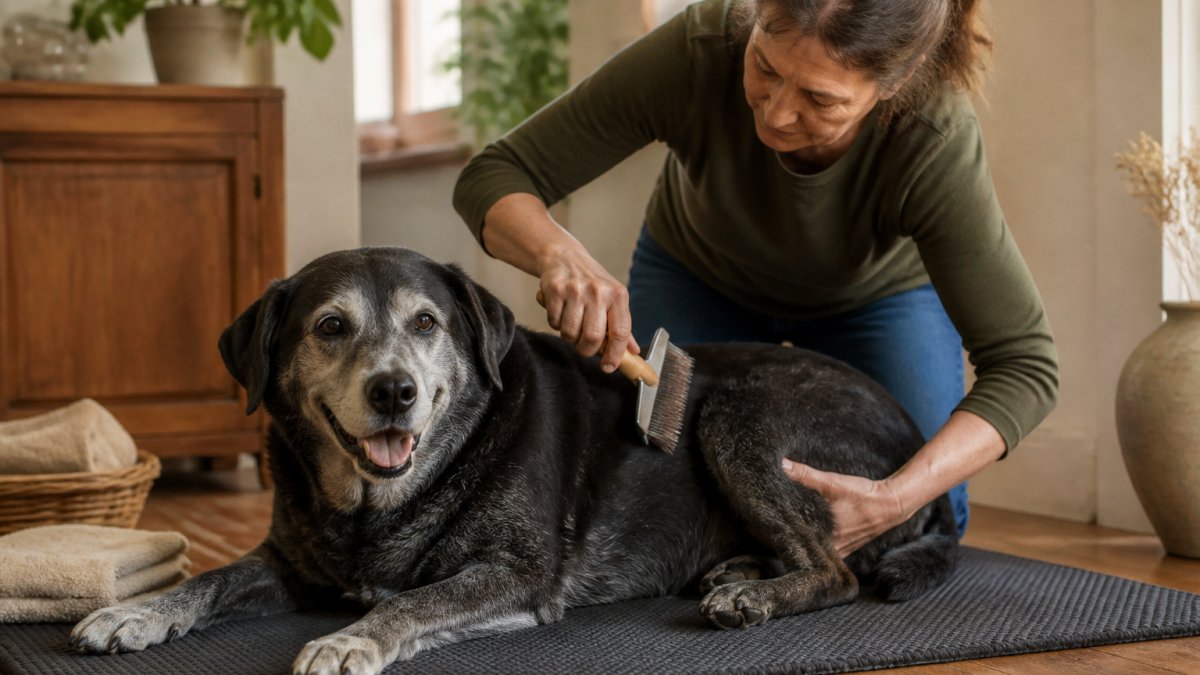
Start with standing tolerance. Time how long your dog stands comfortably before shifting weight or sitting. That number is your session limit, not a target to push past.
4 in 1 Electric Pet Grooming Kit - Hair Trimmer, Clippers, Nail Grinder →
Handling rules that make a real difference:
- Support the hindquarters with one hand during standing work
- Let the dog lie down for brushing where possible
- Work at floor level instead of lifting onto a table
- Split the body across two sessions if needed
- Never lift a large senior dog alone
If your dog is on pain medication, ask your vet about timing. Grooming during the window when medication is working best is a simple change that helps a lot.
Safe Nail Trimming for Senior Dogs
Safe nail trimming for senior dogs comes down to three things: sharp tools, small cuts and good light. Older dogs often have thicker, brittle nails and less patience for being held.
The quick is the blood supply inside the nail. On clear nails you can see it as a pink line. On dark nails you cannot, so take tiny slivers off the tip and check the cut surface after each one.
A simple rule set:
- Trim a little every two to three weeks rather than a lot every few months
- Take 1 to 2 mm per cut on dark nails
- Look for a pale, dry center on the cut surface, which means you are close
- Stop the moment the dog pulls away repeatedly
A grinder is often easier on senior dogs than clippers. Our 4 in 1 Electric Pet Grooming Kit includes a nail grinder alongside a trimmer and clippers, runs quietly at under 60 dB, and gives up to two hours of cordless use.
If you have never trimmed nails before, have a vet or groomer show you once in person. Watching the technique on your own dog is worth more than any written guide.
How Often to Groom an Older Dog
How often to approach senior dog grooming depends on coat type and mobility, not a fixed calendar.
| Task | How Often | Session Length | Watch For |
|---|---|---|---|
| Brushing | 3-4 times a week | 5-10 minutes | Mats, tender spots, skin redness |
| Bathing | Every 4-8 weeks | 15-20 minutes | Dryness, itching after the bath |
| Nail trim or grind | Every 2-3 weeks | 2-5 minutes | Pulling away, sensitivity at the tip |
| Ear and eye wipe | Weekly | 2 minutes | Discharge, odor, redness |
| Full body check | Weekly | 3 minutes | New lumps, warm areas, cuts |
Dogs that spend most of the day lying down need more frequent brushing, not less. Pressure on the coat from lying creates mats faster, especially on the hips and elbows.
Coat type changes the schedule too. Double coats need more brushing during seasonal shedding. Short coats need less. Curly coats mat quickly and often need professional help.
Red Flags: When to Stop and Call Your Vet
Stop grooming immediately if your dog yelps, guards a body part, pants heavily, trembles, or tries to bite. These are pain and stress signals, not behavior problems.
Then call your vet if you notice any of the following:
- A new lump or a lump that has changed size
- Skin that is red, broken, warm or weeping
- Sudden sensitivity in one area, especially the spine or hips
- Nails that are cracked, split or growing into the pad
- Repeated head shaking or ear odor
- A dog that suddenly cannot tolerate handling it used to accept
That last one deserves attention. A senior dog that snaps during grooming after years of calm is telling you something hurts. Book a vet visit before the next session.
Grooming should never be avoided just because a dog is old, but the approach has to change to reduce discomfort. Mild, dog-safe products and shorter sessions cover most of that ground.
Choosing and Briefing a Professional Groomer
A good senior-dog groomer asks about health before they ask about style. If they do not, keep looking.
Brief them properly on the first call. Cover:
- Arthritis or joint issues, and which positions hurt
- Standing tolerance in minutes
- Medication and timing
- Skin conditions or allergies
- Hearing or vision loss
- Any history of snapping during handling
Ask directly how they handle senior dogs. Good answers mention nonslip surfaces, breaks, shorter appointments and no forced standing. Vague answers are a warning sign.
At North Shore Pets, every tool we stock is chosen with health and safety first, and our Tail Satisfaction Guarantee means you can try a tool at home and get your money back if it does not suit your dog. That takes the risk out of finding what works for a sensitive senior.
Frequently Asked Questions
What is the best way to groom a senior dog?
Work in short sessions of 10 to 15 minutes with frequent breaks, and use gentle handling on a nonslip surface. Brush first, bathe only when needed with a mild dog-safe shampoo, and trim nails in small increments. Watch for stress signals and stop if your dog shows discomfort. A survey reported at-home grooming as the most common method at 41%, followed by full-service salons at 30%, so home routines are a normal starting point for senior dog grooming as long as you adapt pace and pressure to your dog's abilities.
How often should you groom an older dog?
Most older dogs do well with brushing two to three times a week, bathing every four to six weeks or when soiled, and nail checks every two to three weeks. Coat type and health conditions change the schedule, so adjust based on matting, skin irritation, and how well your dog tolerates handling. Shorter, more frequent sessions beat long ones, especially for dogs with arthritis or low standing tolerance.
How can you make grooming more comfortable for a dog with arthritis?
Use a nonslip mat, support the hindquarters and chest rather than lifting from the middle, and keep sessions short with breaks. Warm the room, avoid cold floors, and never force a limb into position. If your dog cannot stand for long, groom one area at a time while lying down. Ask your vet about pain management before a grooming appointment, and stop if your dog yelps, pulls away, or shows stress signals.
What grooming tools are safest for older dogs with sensitive skin?
Choose soft-bristle brushes with rounded tips, a wide-tooth comb for tangles, and quiet clippers or a nail grinder to reduce stress. A tool like the 4-in-1 Electric Pet Grooming Kit runs under 60 dB and includes a trimmer, clippers, and nail grinder, which helps for dogs startled by loud equipment. The Electric Cat Steam Brush has soft bristles and rounded tips, making it a gentle option for sensitive skin. Always test a tool briefly and avoid pulling through mats.
Grooming an older dog asks more of you than it used to: more patience, shorter sessions and a sharper eye for discomfort. The payoff is a dog that stays comfortable, clean and easier to handle through its senior years. Start with one short session this week, keep the tools gentle and the room warm, and build from there. Browse our expert-approved grooming tools at North Shore Pets and find the setup that fits your dog's needs, backed by our Tail Satisfaction Guarantee.