

Best Grooming Tools for Sensitive Skin: A 2026 Guide
Last Updated: October 23, 2026
Quick Summary
The best grooming tools for sensitive skin have soft or rounded contact points, flex instead of drag, and are used in short, low-pressure passes. Start with a rubber curry brush or grooming glove, add a rounded-pin brush for medium and long coats, and finish with a soft bristle brush.
- Rubber curry brushes and grooming gloves are the gentlest starting point for most sensitive dogs.
- Use curry brushes dry on short or medium coats in slow circles for two to three minutes.
- Choose rounded-pin brushes with a flexible pad and wider pin spacing for tender skin.
- Keep brushing sessions to five to ten minutes total, in two- to three-minute blocks per area.
- Stop and call your vet if you see broken skin, oozing, spreading redness, or patchy hair loss.
Table of Contents
- Why Sensitive Skin Needs Different Grooming Tools
- The Best Dog Brushes for Sensitive Skin
- What a Soft Bristle Dog Brush Can and Cannot Do
- How to Brush a Dog With Sensitive Skin, Step by Step
- Sensitive Skin Dog Grooming Tips for Every Coat Type
- When to Stop Grooming and Call Your Vet
- Conclusion
- Frequently Asked Questions
Why Sensitive Skin Needs Different Grooming Tools
A dog with sensitive skin is not just a dog that scratches a little more.
The best grooming tools for sensitive skin share three traits: soft or rounded contact points, flex instead of drag, and short, low-pressure passes. That combination separates a tool a dog will tolerate from one that sits unused.
Sensitivity is not one condition. It can come from allergies, dry skin, a recent clip-down, or a thin coat with little padding, and each changes which tool is safe and how often to use it.
Merck Veterinary Manual on canine skin disorders notes that itching and skin inflammation in dogs have many underlying causes, which is why tool choice should follow a diagnosis, not replace one.
The Best Dog Brushes for Sensitive Skin
The best dog brushes for sensitive skin are those with soft bristles, rounded or ball-tipped pins, or flexible rubber nubs, used with light pressure and short strokes.
Below, we break the main categories down by what they do to skin, not how they look on a shelf: what contact point touches the skin, how much pressure the tool transmits, and which coat and sensitivity level it suits.
Rubber Curry Brushes and Grooming Gloves
Rubber curry brushes and grooming gloves are the gentlest starting point for most sensitive dogs. The nubs are soft, flex against the body, and lift loose hair and surface grime without scratching. A grooming glove does the same job with your hand as the backing, which many nervous dogs accept more readily than a handled tool.
Use them dry on a short or medium coat, in slow circles, for two to three minutes. They are also the right tool for a dog that will not tolerate anything else yet. The trade-off is reach: curry nubs struggle with dense undercoat and long feathering, so treat them as a warm-up and bonding tool rather than a full groom.
Rounded-Pin and Ball-Pin Brushes
A pin brush with rounded tips, sometimes sold as a ball-pin brush, is the workhorse for medium and long coats.
Pin spacing matters too. Widely spaced pins on a flexible cushion are more forgiving on tender skin and thin coats; tightly packed pins detangle better but concentrate pressure.
Avoid slicker brushes with sharp, straight pins for now. They are effective on heavy coats, but the wire tips can scrape irritated skin.
Soft Bristle Brushes
A soft bristle brush is a finishing tool. It smooths the topcoat, spreads natural oils, and removes light loose hair, but it will not break up mats or pull out undercoat. Use it last, after the curry or pin brush has done the lifting, and let the bristles glide rather than press.
Slicker Brushes and Undercoat Rakes
Slickers and rakes are the highest-risk tools for sensitive skin because their wire pins and metal teeth concentrate force. They are not banned, but they belong in short, deliberate sessions once the skin is calm, and should never be dragged through a knot. On a dog with redness or scabs, leave them in the drawer until a vet clears the skin.
Matching the Tool to Coat, Sensitivity, and Goal
Use this as a starting point, then adjust to how your dog responds:
| Coat / Situation | Lead Tool | Support Tool | Avoid Until Calm |
|---|---|---|---|
| Short coat, mild sensitivity | Rubber curry brush | Soft bristle brush | Slicker, rake |
| Medium coat, mild sensitivity | Rounded-pin brush | Soft bristle brush | Firm slicker |
| Long or silky coat | Rounded-pin brush, wide spacing | Detangling comb | Rake, stiff slicker |
| Double coat in season | Undercoat rake, short sessions | Curry brush | Long rake sessions on sore skin |
| Nervous dog or puppy | Grooming glove | Soft bristle brush | Any pinned tool at first |
| Active irritation or scabs | Grooming glove only | None | All pinned and metal tools |
The goal matters as much as the coat. Detangling calls for a comb or wide-spaced pin brush; deshedding for a rake or curry; maintenance for a soft bristle or glove. Choosing one brush to do all three is how sensitive dogs end up sore.
What a Soft Bristle Dog Brush Can and Cannot Do
A soft bristle dog brush is a finishing and surface tool, not a de-shedding tool.
Owners often buy one soft brush expecting it to do everything, then press harder when it doesn't work, and pressure is exactly what a sensitive dog cannot take.
4 in 1 Electric Pet Grooming Kit - Hair Trimmer, Clippers, Nail Grinder →
Here is how the main tool types compare for a sensitive-skinned dog:
| Tool | Best For | Skin Risk | Use Frequency |
|---|---|---|---|
| Rubber curry brush | Short coats, warm-up | Low | 3-4 times weekly |
| Grooming glove | Nervous dogs, light shedding | Low | Daily if tolerated |
| Rounded-pin brush | Medium and long coats | Low to moderate | 2-3 times weekly |
| Soft bristle brush | Finishing, shine, light hair | Low | After every brush-out |
| Slicker brush | Heavy coat, mats | High on sore skin | Only once skin settles |
| Undercoat rake | Double coats in season | High if pressed | Short sessions, careful use |
For a dog with active irritation, stay in the top four rows until a vet clears the skin.
How to Brush a Dog With Sensitive Skin, Step by Step
Brushing a sensitive dog is a routine, not a task. Aim for a calm, short session that ends before the dog wants it to, so the next one is easier. Total time: five to ten minutes.
What you'll need: a rubber curry brush or grooming glove, a rounded-pin brush if the coat needs it, a soft bristle brush to finish, and a few small treats.
- Check the skin first. Run your hands over the body and look for redness, scabs, or tender spots. Skip those areas entirely.
- Start where the dog is comfortable. Most dogs accept the chest and shoulders before the hindquarters.
- Use short, light strokes. Let the tool do the work. If you can see the skin pull, you are pressing too hard.
- Work in sections. One area at a time, two to three passes, then move on.
- Finish with the soft bristle brush. This smooths the coat and removes the last of the loose hair.
- Stop early and reward. End on a good note, even if you have not finished the whole dog.
Pressure, Direction, and Session Length
What separates a comfortable groom from a sore one is not the tools alone but how hard you press, which way the tool travels, and how long you stay in one spot.
- Pressure: aim for the weight of the tool itself, not your arm. A useful check is to brush the back of your own hand first; if the pins scratch or drag, they will do the same to a sensitive dog.
- Direction: work with the coat, not against it, on the first pass. Against-the-grain strokes lift more undercoat but also pull at follicles, so save them for short-coated dogs with calm skin and keep them brief.
- Session length: five to ten minutes total, in two- to three-minute blocks per body area. Puppies and nervous dogs often do better with two short sessions a day than one long one.
A Low-Irritation Sequence
For mild sensitivity, a safe order is: grooming glove or curry brush as a warm-up, rounded-pin brush on the body and legs, soft bristle brush to finish, and a comb only on the tail and feathering. Skip the hindquarters and belly if the dog guards them, and never work a knot from the top down, hold the hair above the knot and tease the ends free.
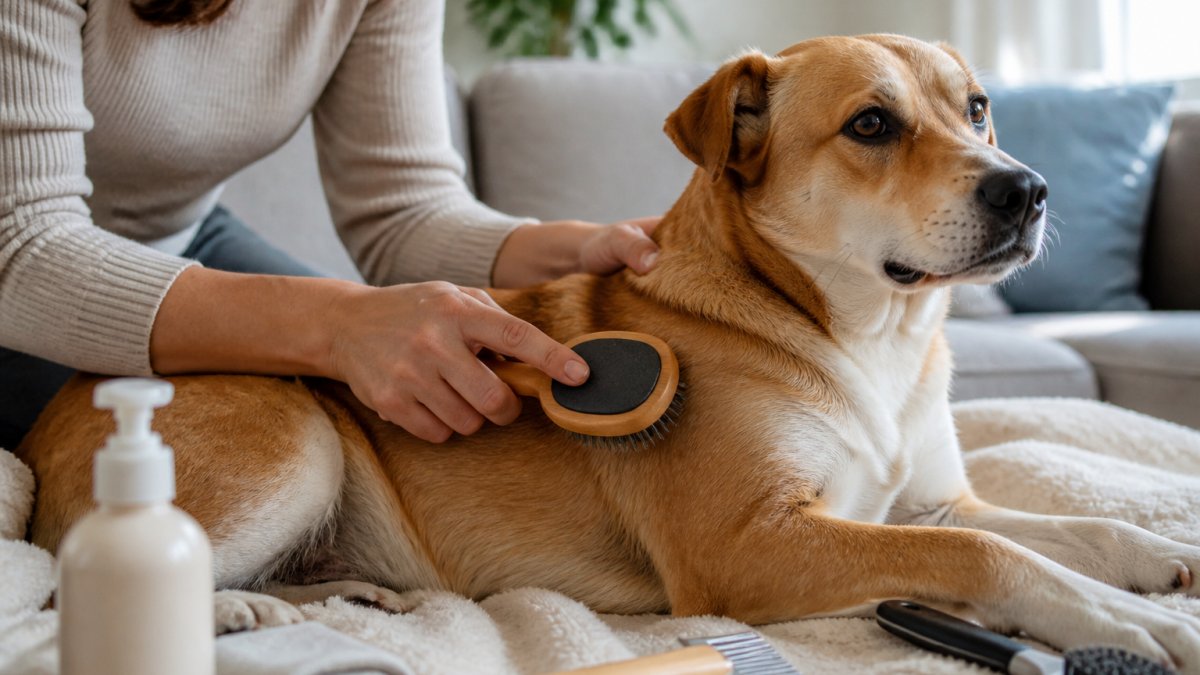
Sensitive Skin Dog Grooming Tips for Every Coat Type
Coat type decides which tool leads and how often you brush. Short coats need the least work; double coats need patience and the right sequence.
- Short coats: a rubber curry brush or grooming glove two to three times a week is usually enough. Add a soft bristle brush for shine.
- Medium-length coats: start with a rounded-pin brush, then finish with a soft bristle brush. Brush two to three times weekly.
- Long and silky coats: work in small sections with a rounded-pin brush and detangle gently from the ends upward. Never pull through a knot.
For coats that need a trim rather than a brush-out, our 4 in 1 Electric Pet Grooming Kit runs under 60 dB, which matters for sound-sensitive dogs, and gives up to two hours of cordless use. If you want a single gentle tool for light shedding and daily bonding, our Electric Cat Steam Brush has soft bristles and rounded tips designed to protect against irritation.


Beyond brushes, a microfiber towel and a mild, vet-recommended shampoo do more for comfort than any single tool. Wash tools in warm soapy water monthly and replace any brush with bent pins or worn nubs.
When to Stop Grooming and Call Your Vet
Stop grooming and call your vet if you see broken skin, oozing, spreading redness, hair loss in patches, or a dog that yelps when touched.
Other signs that need professional attention include constant scratching that interrupts sleep, a greasy or foul-smelling coat, recurring ear or paw irritation, and any lump or sore that changes. AVMA guidance on pet skin and coat health recommends regular veterinary checks as part of routine care, and skin changes are one of the most common reasons owners book a visit.
The FDA's guidance on pet medicated products is also worth reading before you buy any over-the-counter shampoo or spray marketed for skin conditions. Some products are medicated and should only be used under veterinary direction.
Conclusion
Sensitive skin changes the whole grooming equation: softer tools, shorter sessions, and a willingness to stop before the dog has had enough. The best grooming tools for sensitive skin are the ones your dog will actually sit still for, used lightly and often.
If you are starting over with a nervous dog, begin with a rubber curry brush or grooming glove, add a rounded-pin brush once the coat needs it, and finish with a soft bristle brush.
Frequently Asked Questions
What grooming tools are best for a dog with sensitive skin?
Start with tools that have soft, rounded contact points: a rubber curry brush or grooming glove for short coats, a ball-pin slicker for medium coats, and a soft bristle dog brush for finishing. Avoid sharp-tipped slickers, close-tined metal combs, and undercoat rakes on irritated skin. Match the tool to your dog's coat type and check the skin after every few strokes. If you see redness or your dog flinches, switch to a gentler tool or stop for the day.
Is a pin brush or slicker brush gentler for a sensitive-skinned dog?
A ball-pin or rounded-pin brush is usually the gentler choice because the tips are capped and glide over the skin instead of scraping it. A standard slicker with fine, sharp pins can scratch sensitive skin, especially on thin-coated areas like the belly and inner legs. If you already own a slicker, use it with a light hand and only on the outer coat, then finish with a soft bristle dog brush. Stop if your dog shows discomfort.
How often should you brush a dog with sensitive skin?
Short, frequent sessions beat long ones. Try 5 to 10 minutes every other day for short coats, and daily for medium or long coats that mat easily. Brushing regularly in small doses removes loose hair before it tangles, which means less pulling on the skin. Watch for signs like lip licking, yawning, or pulling away, and end the session while your dog is still relaxed. If the skin looks red or broken, pause and check with your vet.
When should I stop grooming and contact a veterinarian about skin irritation?
Stop grooming if you see open sores, bleeding, crusting, widespread redness, hair loss in patches, or a bad smell. Also stop if your dog yelps, snaps, or guards a body area, since pain during brushing can point to an underlying skin problem. These signs need a vet's assessment rather than a different brush. Grooming tools can manage coat and comfort, but they cannot treat infections, allergies, or parasites.
