

Deshedding Brush or Grooming Rake: Which Do Dogs Need?
Quick Summary
A deshedding brush reaches only the topcoat and mid-layer, while a grooming rake reaches the dense undercoat near the skin. Single and light double coats usually need a deshedding brush, and thick double coats benefit most from a rake during seasonal shedding. Many owners use both: the rake first, then the brush to finish.
- A deshedding brush suits single and lightly double-coated dogs for routine maintenance.
- A grooming rake removes dead undercoat on thick double coats during seasonal blowouts.
- Part the coat at the shoulder, flank and rump to check whether your dog has a double coat.
- Use light pressure and stop if your dog flinches, licks, or shows skin irritation.
- Neither tool stops normal shedding; they remove loose hair before it reaches floors and furniture.
Table of Contents
- Deshedding Brush vs Grooming Rake: The Core Difference
- Side-by-Side Comparison: Which Tool Does What
- Undercoat Rake for Dogs: When It Earns Its Place
- How to Identify Your Dog's Coat Type Before Buying
- How to Remove Loose Undercoat from a Dog Safely
- How Often to Brush a Shedding Dog
- Choosing Your Tool: A Simple Routine for Your Dog's Coat
- Frequently Asked Questions
Deshedding Brush vs Grooming Rake: The Core Difference
Last Updated: November 2, 2026
Choosing between a deshedding brush and a grooming rake comes down to one question: how deep does the loose hair sit? A deshedding brush works on the top layers of the coat, while a grooming rake reaches down toward the undercoat. Many owners buy the wrong tool and wonder why their floors still look like a snowstorm. The difference is simple once you understand how each one moves through the coat.
A deshedding brush typically has fine, closely spaced blades or bristles designed to catch loose hair on the surface and mid-layer. It suits short-to-medium coats and dogs with a single or lightly double coat. A grooming rake, sometimes called an undercoat rake, uses widely spaced teeth to slide between the topcoat and reach dead undercoat hair beneath it. That design matters most for thick double coats.
Here's the practical takeaway: the tool needs to match the depth of the problem. A dog that sheds a little year-round might do fine with a brush. A dog that blows its coat each season usually needs a rake for the heavy lifting.
Side-by-Side Comparison: Which Tool Does What
The two tools overlap, but they aren't interchangeable. The table below compares them on the dimensions that actually change your grooming routine: how they reach loose hair, what coat types they suit, how much hair they collect per session, and what can go wrong.
| Feature | Deshedding Brush | Grooming Rake |
|---|---|---|
| Reaches | Topcoat and mid-layer | Undercoat, near the skin |
| Best coat type | Single or light double coats | Thick double coats |
| Blade style | Fine, closely spaced blades or bristles | Wide, widely spaced teeth |
| Typical use | Routine maintenance and coat smoothing | Seasonal blowouts and heavy undercoat removal |
| Hair collected per session | Moderate; best for surface and mid-layer hair | High on double coats; lifts clumps of dead undercoat |
| Time per session | 5-10 minutes for maintenance | 10-15 minutes during a blowout |
| Coat finish | Smooth, tidy surface | Fluffier, lighter coat after undercoat removal |
| Risk if overused | Skin irritation on sensitive dogs; can dull guard hairs with heavy pressure | Snagging on tangles; scraping if pressed too hard |
| Maintenance | Clean blades after each use; replace when teeth dull | Check teeth for bends; clean between sessions |
Pros of a deshedding brush:
- Gentle enough for frequent use on most coats
- Smooths the coat and removes surface debris
- Works well on dogs with sensitive skin when used lightly
- Good finishing tool after a rake session
Cons of a deshedding brush:
- Can miss dense undercoat on heavy shedders
- Less effective on mats and compacted undercoat
- Fine blades can clog on long or curly coats
Pros of a grooming rake:
- Removes large amounts of loose undercoat quickly
- Excellent for double-coated breeds during shedding season
- Widely spaced teeth slide through topcoat without pulling as much as fine blades
Cons of a grooming rake:
- Can pull or irritate skin if pressed too hard
- Not suited to short, single coats
- Teeth can snag on tangles if the coat isn't pre-combed
When choosing between the two, think in stages: a rake does the heavy lifting on dense undercoat, and a brush finishes the coat and handles routine maintenance. Many owners find that using both in sequence gives the best results.
Undercoat Rake for Dogs: When It Earns Its Place
An undercoat rake earns its place when your dog has a dense, insulating undercoat that a brush can't reach. Huskies, German Shepherds, Golden Retrievers, and Corgis are common examples of double-coated dogs that benefit from one. Owners often notice clumps of soft fur appearing around the house during seasonal shedding.
A common mistake is reaching for a rake too early. If your dog doesn't have a thick undercoat, a rake can pull on the topcoat and cause discomfort. Check the coat before you buy.
If you're weighing a rake or a brush for your dog, the Electric Cat Steam Brush - 3-In-1 Pet Grooming Comb with Water Spray for Cats and Dogs, USB Rechargeable is one option to consider, with a rechargeable design and a water spray function.
How to Identify Your Dog's Coat Type Before Buying
Before you buy any tool, part the hair and look at the skin. This short assessment will tell you whether you need a deshedding brush, a grooming rake, or both.
Step 1: Check the layers. Part the coat down to the skin in three places: the shoulder, the flank, and the rump. A single coat shows one layer of hair. A double coat shows a soft, dense undercoat beneath a coarser topcoat. If you can't see the skin easily because the undercoat is thick, you likely have a double coat.
Electric Cat Steam Brush – 3-In-1 Pet Grooming Comb with Water Spray for Cats →
Step 2: Note the texture and length. Wiry, curly, or long coats each call for different handling. Long coats can hide tangles that a rake will snag on, so pre-comb before raking. Curly coats often need a slicker brush or comb rather than a rake.
Step 3: Watch the shedding pattern. Heavy seasonal shedders (often double-coated breeds) blow coat once or twice a year and need a rake during those periods. Dogs that shed lightly all year may do fine with a deshedding brush for routine maintenance.
Step 4: Match the tool to the depth of the problem. If loose hair sits on the surface and mid-layer, a deshedding brush is enough. If you can pinch a clump of soft undercoat near the skin, a grooming rake is the better first tool.
A common pattern is that owners of double-coated breeds buy a brush first, then add a rake once they see how much undercoat a brush leaves behind. Starting with the assessment above can save that extra purchase.
How to Remove Loose Undercoat from a Dog Safely
Safe removal depends on light pressure, short strokes, and attention to your dog's reactions. Work in sections, brushing with the coat's growth direction first. Then go against the grain gently to lift loose undercoat from close to the skin.
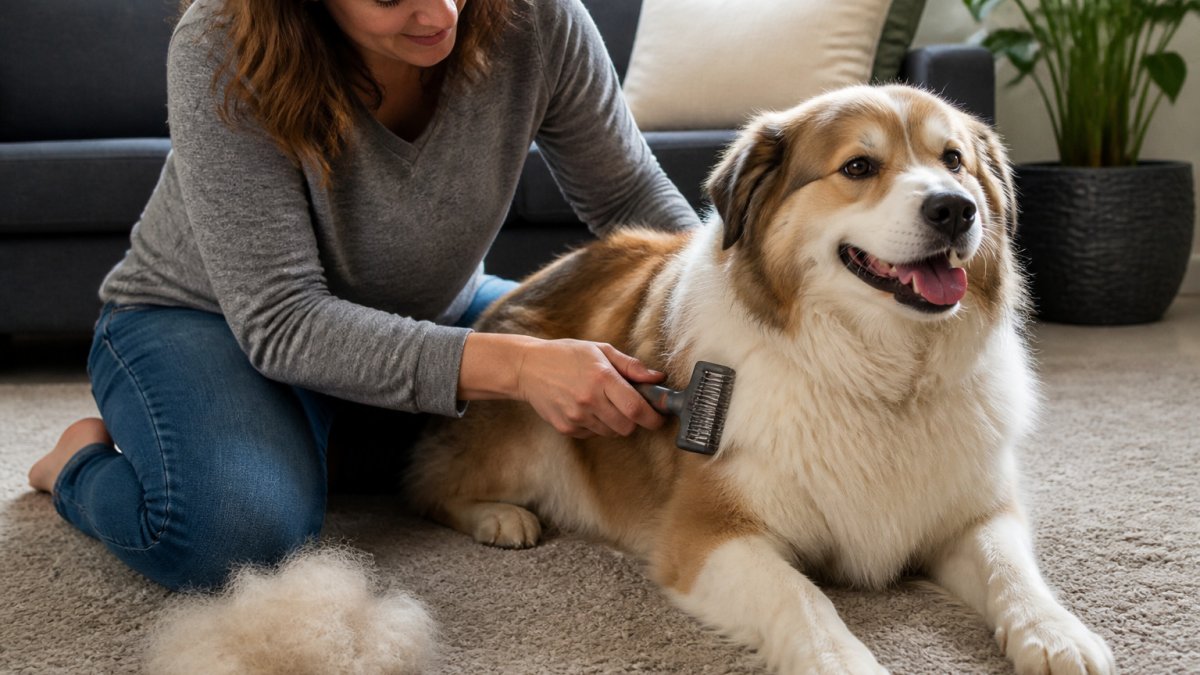
Keep these habits in mind:
- Use light pressure.
- Stop if your dog flinches, licks, or shows signs of discomfort.
- Watch for redness, irritation, or bald patches, and skip the area if you see them.
- Never drag a rake across mats. Work them apart with your fingers or a dematting tool first.
Warning signs such as sudden heavy hair loss, bald patches, or skin changes can point to a health issue. Contact your veterinarian rather than assuming it's normal shedding.
How Often to Brush a Shedding Dog
Many dogs benefit from brushing a few times a week, and shedding season may call for more frequent sessions.
Shorter, frequent sessions are often easier on your dog than one long grooming session.
Choosing Your Tool: A Simple Routine for Your Dog's Coat
Start with the coat type, then match the tool. For a single or light double coat, a deshedding brush handles routine maintenance. For a thick double coat, pair a grooming rake for seasonal blowouts with a brush for everyday smoothing. Many owners find that using both tools in sequence gives the best results.
Build a simple routine: brush first to lift surface hair, rake the undercoat during shedding season, then finish with a gentle brush. Keep the sessions short and calm.
If you're looking for a complete starting point, our Best Dog Grooming Kit for Beginners: 2026 Buying Guide explains how to pull these tools together. For dogs with sensitive skin, our Best Grooming Tools for Sensitive Skin: A 2026 Guide covers gentler options worth considering.
Frequently Asked Questions
What is the difference between a dog deshedding brush and a grooming rake?
A deshedding brush typically has fine, closely spaced edges designed to lift loose hair from the topcoat and the outer layer of the undercoat, which suits moderate shedding and everyday maintenance. A grooming rake has widely spaced teeth that reach deeper into a dense double coat to pull out loose undercoat and help prevent mats. For heavy seasonal shedding on a thick double coat, a rake usually removes more dead hair. For short or single coats, a brush is often gentler and more practical. Check your dog's coat before deciding.
Which is better for removing loose undercoat: a deshedding brush or a grooming rake?
For loose undercoat on a double-coated dog, an undercoat rake is generally the better choice because its teeth reach down to the dense layer near the skin. A deshedding brush works well on the topcoat and lighter shedding. Use the rake gently, working in sections and in the direction of hair growth, and follow with a brush to smooth the coat. Stop if the skin looks red or the dog shows discomfort.
How often should you use a deshedding brush on a dog?
Many owners brush a shedding dog several times a week, and more often during seasonal shedding periods when loose hair builds up quickly. Dogs with dense double coats generally need more frequent sessions than dogs with short single coats. Short, regular sessions of a few minutes are usually more comfortable for the dog than one long session. Watch your dog's reaction and adjust frequency and pressure to what they tolerate.
Can a deshedding tool damage a dog's coat or skin?
Yes, if it is used with too much pressure, too often, or on a dog with sensitive skin. Pressing hard can irritate the skin or pull on guard hairs, and tools with very dense teeth can scratch. Work gently, avoid the same spot repeatedly, and stop if you see redness, scabs, or signs of discomfort. Persistent skin problems or unusually heavy hair loss can also point to a health issue, so check with your veterinarian.
